Open Now
24/7 Emergency Service Available
Pool & Spa Services
★★★★★
Trusted by Homeowners & Companies
24/7 Rapid Response | Residential & Commercial
24/7 Rapid Response | Residential & Commercial
Maximize your pool and spa performance with expert installation and repair of high-efficiency pumps and heaters. We diagnose fast, resolve issues same-day, and keep your water at the perfect temperature — along with full filtration, sanitization, plumbing leak repair, and compliance services year-round.
- Pool Plumbing Leak Repair — Lines, Fittings & Equipment
- Pool Pump Installation & Repair
- High-Efficiency Heater Installation & Repair
- Fast Diagnosis & Same-Day Service
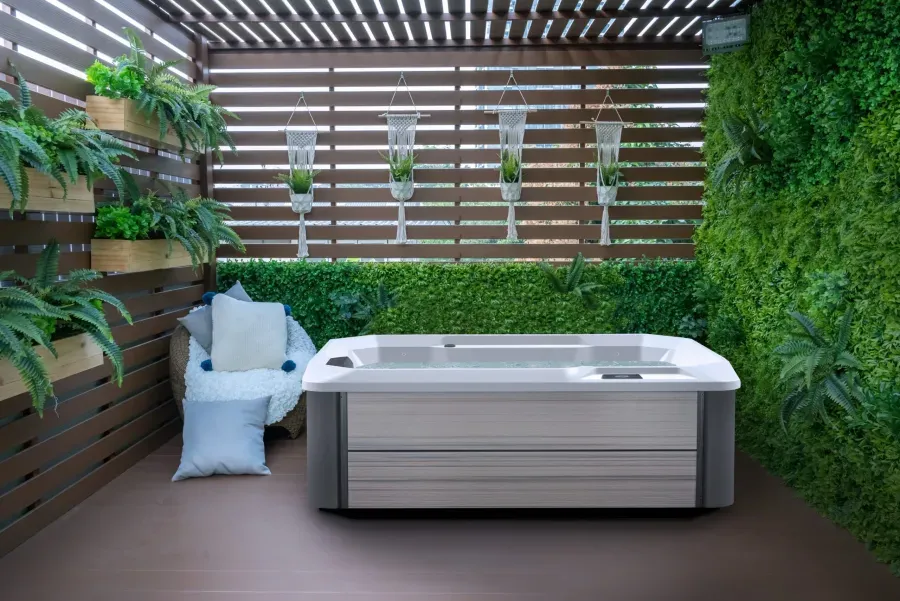
- Spa & Jacuzzi Services
- Filtration System Services
- Salt Generator Systems
- Water Sanitizer Installation
- Backflow Testing & Preventers
- Pool Plumbing Leak Repair — Lines, Fittings & Equipment
- Pool Pump Installation & Repair
- High-Efficiency Heater Installation & Repair
- Fast Diagnosis & Same-Day Service
- Spa & Jacuzzi Services
- Filtration System Services
- Salt Generator Systems
- Water Sanitizer Installation
- Backflow Testing & Preventers
Available Now — Call for Same-Day Service
Tell us the problem → we connect you to a local pro → quote on the call, no obligation
Need Service? Available Now
Call NowCall (888) 664-0386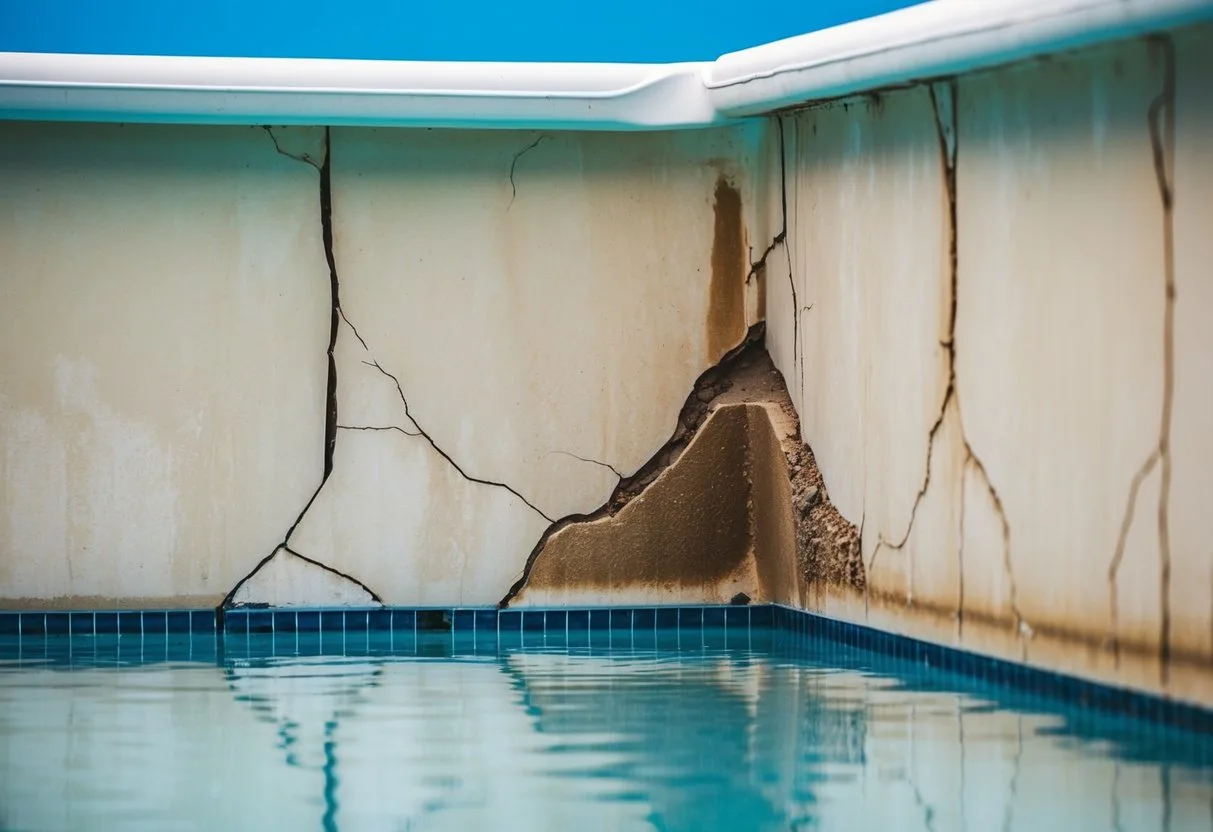
Honest Pricing, No Surprises
Wondering what it will cost? Here's exactly how it works. Getting connected to a local plumbing pro is straightforward, and you'll always know the price before any work begins — no pressure, no guesswork.
No Cost to Get Connected
Reaching out costs you nothing. We connect you with a local plumbing pro at no charge — you only pay for the work you decide to move forward with.
Up-Front, No-Obligation Quote
Get a clear quote before any work starts. Review the price, ask questions, and decide on your own terms — there's never any obligation to commit.
No Hidden Fees
The price you discuss is the price you plan around — no surprise add-ons buried in the bill. You'll know what to expect before the job begins.
Pool Plumbing Leaks — Found & Fixed
Losing more than about a quarter inch of water a day? That's beyond normal evaporation — your pool is leaking. The plumbing side of that — the lines, fittings, and equipment moving your water — is exactly what a plumber finds and fixes, usually without draining the pool:
Already sure you're losing water? Skip the testing — call now and get it confirmed on-site.
Call NowCall (888) 664-0386Bucket test to rule out evaporation
A bucket of water set on a pool step, marked and compared against the pool level over 24 hours, separates a true leak from evaporation before any testing begins.
Pressure testing the plumbing lines
Each underground line is isolated and pressure tested to confirm whether the leak is in the pool's plumbing runs — and exactly which one — before anything gets dug up.
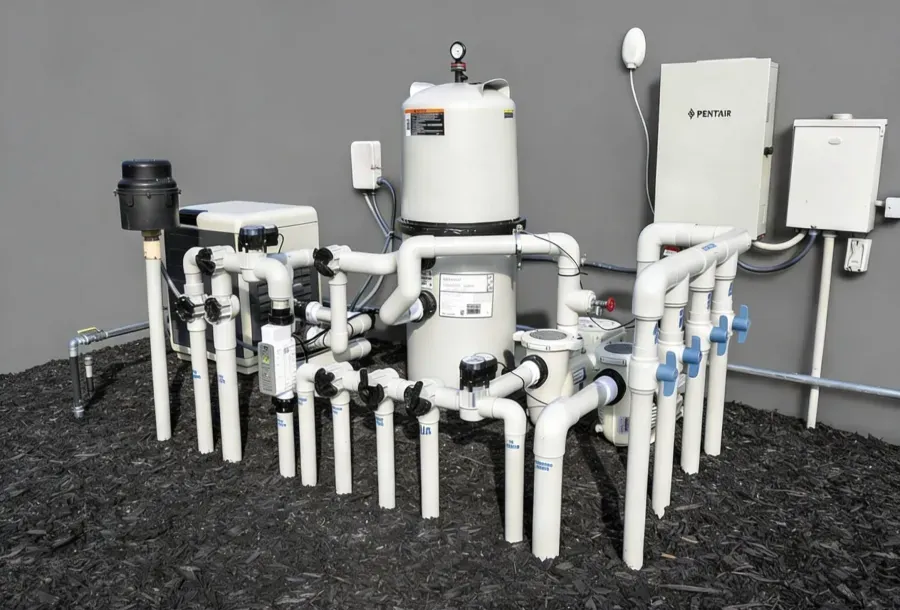
Leaks at the equipment pad
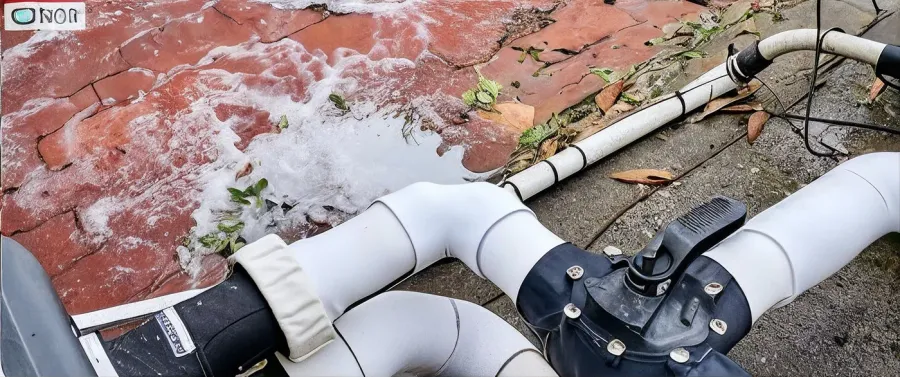
Pump seals, heater connections, filter housings, valves and unions are where pool plumbing leaks show up first — visible, reachable, and usually repaired in the same visit.
Shell & structural leaks — know the difference
A crack in the shell or a failing main drain below the waterline is pool-specialist work, not plumbing. If the testing points there, you'll be told straight — what gets fixed here is the plumbing: the lines, fittings, and equipment.
Signs your pool is leaking
The autofill running constantly, chemical use creeping up, algae returning faster than usual, or soggy ground and a settling deck around the pool all point to escaping water.
Found and fixed — often the same visit
Once located, many plumbing leaks — skimmer and return fitting seals, unions, and line spot repairs — can be fixed on the spot, with a no-obligation quote before any work begins.
Pool Pumps & Motors
The pump is the part of the system that fails loudest and soonest. Most of what goes wrong announces itself in one of these ways:
Won't prime, or the basket is full of air
Air in the basket is a suction-side problem — the lid o-ring, the drain plugs, a loose union, or a water level low enough that the skimmer gulps. It is a different repair from a pump that drips, and chasing the wrong side is how an afternoon disappears.
Grinding, screeching, or a hum that never starts
Grinding and screeching are bearings, and they only get more expensive with runtime. A motor that hums but never spins is usually the start capacitor — an inexpensive part that strands an otherwise healthy pump.
Running, but the flow is weak
Check the obvious first: a dirty filter, a clogged pump or skimmer basket, or a partially closed valve. If those are clear, a blocked impeller or a failing motor is next, and the pressure gauge reading tells the technician which before the pump comes apart.
Leaking at the pump itself
Water at the base is usually the mechanical seal, and running a pump with a failed seal pushes water into the motor — turning a modest part into a full replacement. Shut it off and call.
Motor swap or whole pump?
If the wet end is sound, a motor-only replacement often restores the pump for a fraction of the cost. That call gets made in front of you, with both numbers, rather than defaulting to the bigger sale.
Variable-speed upgrades
Federal rules since 2021 push most residential replacement pumps above about 1.15 total horsepower to variable-speed. Running longer at lower RPM moves the same water for far less energy — and it's markedly quieter, which homeowners notice first.
Pool & Spa Heaters
A heater that won't fire is usually protecting itself, not broken. The diagnostic order matters, because the least costly causes are also the most common:
Low flow shuts a heater down by design
A dirty filter, a clogged basket, or a valve left part-closed drops flow below the pressure switch's threshold and the heater refuses to light. This is the first thing checked and a meaningful share of no-heat calls end here.
Ignition faults
Control boards, igniters, flame sensors and gas valves are the next tier — real repairs, but bounded ones, and the parts that fail most on gas heaters past their fifth season.
A corroded heat exchanger
This is the one that decides a heater's fate. Water chemistry left unbalanced — low pH especially — eats the exchanger from inside, and that part carries most of the heater's value. On an older unit this is a replacement conversation, and you'll get it straight.
Heat pump heaters warm slowly on purpose
They pull heat from the air, so output falls as the air cools and they raise water temperature over hours rather than on demand. Slow warming on a cool morning is the technology, not a fault. Warm air and cold water is a fault.
Sizing a replacement
Heaters are sized to the pool's surface area — where the heat actually escapes — not simply its gallons, with wind exposure and whether you use a cover factored in. An undersized heater never catches up on the days you most want it.
Salt systems and heater life
Salt chlorine generators and heaters coexist fine when the chemistry is watched. When it isn't, the heater is what pays for it first — which is why sanitation, filtration and heater service belong with the same visit.
What Pool & Spa Work Costs — Honestly
Typical ranges worth knowing before anyone arrives: isolating and pressure-testing the plumbing lines $200–$600 depending on how many runs have to be tested; a pool pump replacement $700–$1,800, or $1,200–$2,500 for variable-speed; a motor-only swap $250–$600; heater repairs $200–$700 for ignition parts, pressure switches, and thermostats; and salt cell replacement $500–$1,000.
Replacement heaters run roughly $2,500–$5,500 for gas and $3,000–$6,500 for a heat pump. Where a repair and a replacement are genuinely close, you'll see both numbers side by side and the decision stays yours — no work starts on a maybe, and getting connected with a local pro costs you nothing.
Frequently Asked Questions
How do you find a leak in a pool?
On the plumbing side, in stages: a bucket test confirms the loss is a leak and not evaporation, then the underground lines are isolated and pressure tested to find which run is losing water, and the equipment pad — pump seals, heater connections, valves, unions — is checked where leaks show up first. The pool stays full the whole time. One honest boundary: a crack in the shell or a failing main drain below the waterline is pool-specialist work rather than plumbing, and if the testing points there you'll be told straight instead of paying for the wrong visit.
Is my pool losing water from a leak or just evaporation?
Normal evaporation runs up to about a quarter inch a day depending on sun, wind, and heat. Set a bucket of water on a pool step, mark both levels, and compare after 24 hours: if the pool dropped noticeably more than the bucket, you have a leak and it's worth a call.
My pool pump is full of air and won't hold prime — what's wrong?
Air in the basket means the suction side is pulling air in somewhere between the skimmer and the pump: the pump lid o-ring (the usual culprit — dry, flattened, or cracked), the drain plugs, a loose union, or simply a water level low enough that the skimmer gulps air. Note that a pump which drips water and a pump which loses prime are two different repairs — the discharge side pushes water out, the suction side draws air in.
How much does a pool pump replacement cost?
Typically $700–$1,800 installed for a standard replacement and $1,200–$2,500 for a variable-speed model. Federal efficiency rules that took effect in 2021 mean most residential replacement pumps above roughly 1.15 total horsepower have to be variable-speed now — not a bad outcome, since running longer hours at lower RPM cuts pump energy use sharply against a single-speed unit. If the wet end is still sound, a motor-only swap at $250–$600 is the smarter fix, and you'll be told when that's the case rather than sold a whole pump.
Why isn't my pool heater heating?
Start with the inexpensive causes: a dirty filter or a closed valve starving water flow — heaters shut themselves down on low flow by design — a tripped pressure switch, or a thermostat set below the current water temperature. After that it's ignition (control board, igniter, gas valve) or a corroded heat exchanger, which is what months of unbalanced water chemistry does to a heater from the inside. A same-day diagnostic separates them, and the first group is usually fixed on the visit.
Should I repair or replace a pool heater?
Gas pool heaters typically last 5–10 years and heat pump models 10–15. Ignition parts, pressure switches, and thermostats are worth repairing at almost any age — call it $200–$700 depending on the part. A failed heat exchanger is the dividing line, because that component is most of the heater's value: on an older unit, replacement usually wins the math. New units run roughly $2,500–$5,500 for gas and $3,000–$6,500 for a heat pump, and you'll see repair and replacement numbers side by side.
Why does my heat pump pool heater barely warm the water?
Often it's working as designed and being asked for too much. Heat pump heaters pull warmth from the air, so they lose output as ambient temperature falls — below roughly 50°F they slow dramatically — and they raise water temperature gradually over hours rather than on demand like a gas heater. If the air is warm and the water still isn't moving, then it's real: low refrigerant, a failed reversing valve, or a fan or compressor fault.
Do you service spas and hot tubs too?
Yes — spa pumps, blowers, heaters, jets and plumbing leaks, plus the salt systems, filtration and sanitizer equipment shared with pools. Worth mentioning on the phone if it's the spa: spa-side leaks usually turn up at jet bodies and unions rather than in the shell, which is a different hunt than a pool leak and gets a different first hour.
Leak inside the house instead? Water Leak Detection →
Same-Day Service Available · Trusted Experts · No Hidden Fees
Call NowCall (888) 664-0386Disclaimer: Plumbingservicenearby.com is a free service to assist homeowners in connecting with local service providers. All contractors/providers are independent and plumbingservicenearby does not warrant or guarantee any work performed. It is the responsibility of the homeowner to verify that the hired contractor furnishes the necessary license and insurance required for the work being performed. All persons depicted in a photo or video are actors or models and not contractors listed on plumbingservicenearby.
Same-day and 24/7 emergency services are subject to provider participation, location, technician availability, and demand. Availability is not guaranteed and may vary by market and appointment capacity.